CSI Structural Bridge Design Software: Why It Leads Modern Bridge Engineering
10 January 2026Table of Contents
CSI Structural Bridge Design Software: Why It Leads Modern Bridge Engineering
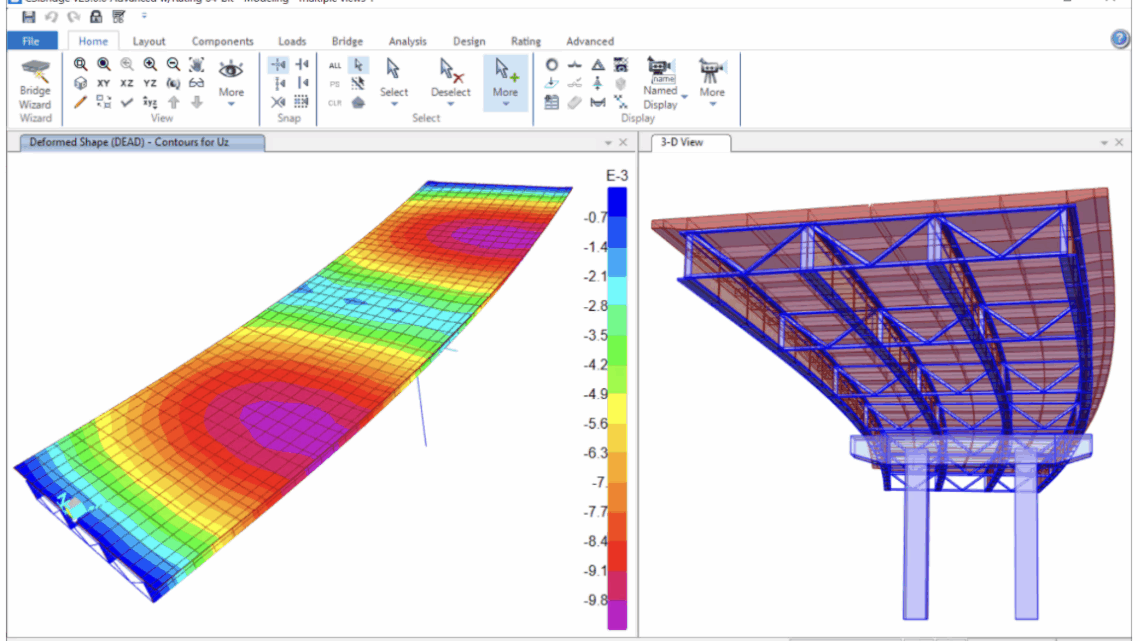
CSI Structural Bridge Design Software, developed by Computers and Structures, Inc. (CSI), is one of the most advanced and trusted solutions for the analysis, design, and evaluation of bridge structures. Known primarily through tools like CSiBridge, CSI software is widely used by bridge engineers, consultants, and infrastructure authorities worldwide.
This article explains what makes CSI bridge software better than competitors, compares it with other well-known bridge design tools, and highlights what engineers should know before buying and using it.
What Is CSI Structural Bridge Design Software?
CSI’s flagship bridge solution is CSiBridge, a fully integrated software environment for:
-
Bridge modeling
-
Structural analysis
-
Code-based design
-
Load rating and evaluation
CSiBridge is built on the same proven engine as SAP2000 and ETABS, combining powerful finite element analysis with bridge-specific workflows.
Famous Structural Bridge Design Software (Industry Comparison)
Before choosing CSI, engineers often compare it with other popular bridge design tools:
1. MIDAS Civil
-
Strong for staged construction and long-span bridges
-
Excellent for cable-stayed and suspension bridges
-
Steeper learning curve
2. LUSAS Bridge
-
Advanced finite element capabilities
-
Strong for research and complex nonlinear problems
-
Less intuitive interface for everyday design
3. RM Bridge (Bentley)
-
Good integration with Bentley ecosystem
-
Used by large infrastructure organizations
-
Can be complex and resource-heavy
4. SOFiSTiK
-
Very powerful and flexible
-
Strong parametric design capabilities
-
Requires advanced scripting knowledge
5. OpenBridge Designer (Bentley)
-
Strong BIM and visualization features
-
Integrated with OpenRoads
-
Analysis flexibility is more limited than CSI tools
Why CSI Bridge Software Is Better Than Many Alternatives
1. Bridge-Specific Modeling Environment
CSiBridge allows engineers to model:
-
Girder bridges
-
Slab bridges
-
Box girder bridges
-
Segmental bridges
-
Curved and skewed bridges
All within a dedicated bridge interface, not a generic structural model.
2. Integrated Load Generation (Major Advantage)
CSI excels in automated load handling, including:
-
Moving vehicle loads
-
Lane loads
-
Pedestrian loads
-
Seismic loads
-
Wind loads
Traffic loading is generated according to international bridge design codes automatically, saving hours of manual work.
3. Proven Analysis Engine
CSiBridge uses the same validated analysis engine as:
-
SAP2000
-
ETABS
This ensures:
-
High numerical accuracy
-
Industry acceptance
-
Reliable results for authorities and reviewers
4. Comprehensive Code Support
CSI supports a wide range of bridge design standards, including:
-
AASHTO (LRFD & ASD)
-
Eurocodes
-
Indian codes
-
Chinese codes
-
Other international standards
This makes CSI suitable for global projects.
5. Time-Dependent and Staged Construction Analysis
CSI provides powerful tools for:
-
Creep and shrinkage
-
Construction sequencing
-
Segmental bridge erection
-
Prestressing effects
This is essential for modern concrete bridge design.
6. User-Friendly Interface (Big Practical Advantage)
Compared to some competitors:
-
No heavy scripting required
-
Clear graphical workflow
-
Faster learning curve
This makes CSI ideal for both experienced professionals and new engineers.
What Users Should Know Before Buying CSI Bridge Software
1. Best Use Cases
CSI bridge software is ideal for:
-
Highway bridges
-
Urban overpasses
-
Prestressed concrete bridges
-
Steel girder bridges
-
Bridge evaluation and load rating
For extremely specialized cable-stayed mega bridges, some engineers may combine CSI with other tools.
2. Skill Level Required
-
Basic structural engineering knowledge is essential
-
Familiarity with SAP2000 or ETABS is a big advantage
-
Training resources and documentation are widely available
3. Integration with Other CSI Tools
CSI Bridge works seamlessly with:
-
SAP2000 (advanced analysis)
-
ETABS (building-bridge interaction)
-
SAFE (foundation design)
This creates a complete structural design ecosystem.
4. Licensing and Support
CSI software is:
-
Commercial and professionally supported
-
Regularly updated
-
Accepted by engineering authorities
This is important for firms working on official and regulated projects.
Why Many Engineers Prefer CSI for Bridge Design
Engineers choose CSI because it offers:
-
Balanced power and usability
-
Reliable, industry-proven analysis
-
Efficient bridge-specific workflows
-
Strong global code compliance
It is especially valued in consulting environments, where productivity and accuracy matter.
Final Thoughts
CSI Structural Bridge Design Software stands out as one of the most practical, powerful, and reliable tools for bridge engineering. While other software may specialize in niche areas, CSI offers the best overall balance of modeling efficiency, analytical strength, and real-world usability.
For engineers looking to design, analyze, or evaluate bridges with confidence, CSI remains a top-tier professional choice.