An Introduction to Geotechnical Engineering – Book Review
14 January 2021Table of Contents
An Introduction to Geotechnical Engineering – Book Review
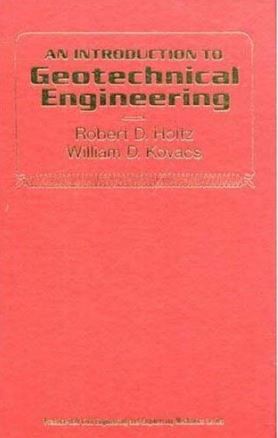
An Introduction to Geotechnical Engineering by Robert D. Holtz and William D. Kovacs is one of the most respected and widely used textbooks in the field of geotechnical and soil engineering. For decades, it has served as a foundational reference for civil engineering students and practicing engineers worldwide.
This book is especially valued for its clear explanations, practical examples, and strong connection between theory and engineering practice.
Book Overview
The book provides a comprehensive introduction to the behavior of soils and their application in engineering design. It balances fundamental soil mechanics theory with practical geotechnical engineering applications.
Key topics covered include:
-
Soil formation and classification
-
Phase relationships and soil properties
-
Permeability and seepage
-
Effective stress and stress distribution
-
Consolidation and settlement
-
Shear strength of soils
-
Slope stability analysis
-
Earth pressure and retaining structures
-
Bearing capacity of shallow foundations
-
Pile foundations and deep foundations
The material is presented in a structured and accessible manner, making it ideal for both learning and reference.
Why This Book Is So Widely Used
What sets this book apart is its ability to explain complex geotechnical concepts in a clear and intuitive way. The authors emphasize:
-
Physical understanding of soil behavior
-
Real engineering examples and case studies
-
Practical design considerations
-
Clear illustrations and problem-solving approaches
Because of this, it is commonly used as a primary undergraduate textbook and a reference book for practicing engineers.
Who Should Read This Book?
This book is highly recommended for:
-
Civil engineering undergraduate students
-
Graduate students starting geotechnical studies
-
Geotechnical and foundation engineers
-
Engineers involved in earthworks, foundations, retaining walls, and slope stability
-
Professionals preparing for FE or PE civil engineering exams
It is particularly suitable for readers who want a strong conceptual understanding rather than purely numerical design procedures.
Practical Relevance in Engineering Practice
Even with the rise of advanced numerical modeling tools, the principles explained in this book remain essential. A solid understanding of soil behavior helps engineers:
-
Make better design assumptions
-
Interpret laboratory and field test results
-
Identify potential failure mechanisms
-
Improve the reliability of geotechnical designs
This makes the book relevant not only academically, but also in everyday engineering practice.
How to Access the Book Legally
To ensure accuracy, full content, and high-quality figures, this book should be obtained through official and legal sources, such as:
-
The publisher’s official website
-
University and engineering bookstores
-
Major online retailers specializing in technical textbooks
Purchasing the official edition supports the authors and ensures access to the complete reference material.
Final Thoughts
An Introduction to Geotechnical Engineering remains a cornerstone textbook in civil engineering education. Its clarity, depth, and practical focus make it an essential resource for anyone studying or working in geotechnical engineering.
Whether you are a student building fundamentals or a practicing engineer revisiting core concepts, this book continues to be a valuable and reliable reference.