Design of Liquid Retaining Concrete Structures (2nd Edition) – Book Review
27 February 2021Table of Contents
Design of Liquid Retaining Concrete Structures (2nd Edition) – Book Review
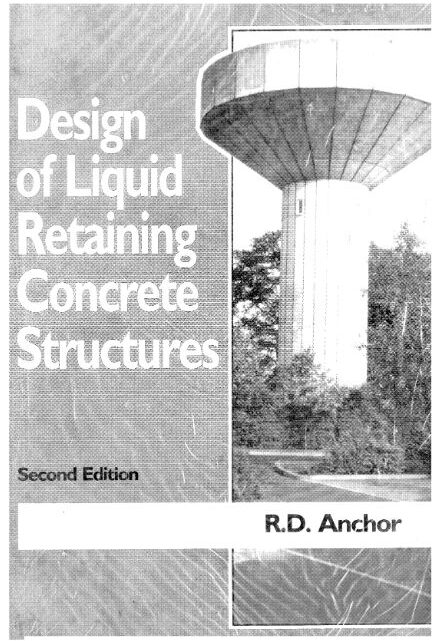
Design of Liquid Retaining Concrete Structures (Second Edition) by R. D. Anchor is a classic reference book focused on the analysis and design of reinforced concrete structures used to store liquids, such as water tanks and reservoirs.
The book is widely used by structural and civil engineers involved in water-retaining and environmental structures.
Book details
-
Title: Design of Liquid Retaining Concrete Structures
-
Author: R. D. Anchor
-
Edition: Second Edition
-
Field: Structural Engineering / Concrete Design
-
Focus: Liquid-retaining reinforced concrete structures
-
Language: English
-
Format: Academic and professional reference
What this book covers
The book explains the structural behavior and design principles of concrete structures that retain liquids, with particular attention to crack control and durability.
Main topics include:
-
Design philosophy for liquid-retaining structures
-
Crack control in reinforced concrete
-
Serviceability requirements
-
Water tanks and reservoirs
-
Circular and rectangular tank design
-
Walls, slabs, and base slabs
-
Load combinations and structural actions
-
Construction considerations and detailing
The content emphasizes serviceability and long-term performance, which are critical for liquid-retaining structures.
Why this book is useful
-
Strong focus on crack control and serviceability
-
Clear explanation of liquid-retaining design concepts
-
Useful for water supply and wastewater projects
-
Practical guidance for reinforced concrete detailing
This makes the book valuable for engineers working on tanks, reservoirs, and similar concrete structures.
Who should read this book?
This book is recommended for:
-
Structural and civil engineers
-
Engineers working on water and wastewater infrastructure
-
Graduate students in structural engineering
-
Engineers involved in reinforced concrete design
Pros and limitations
Pros
-
Practical focus on liquid-retaining concrete design
-
Clear treatment of crack control issues
-
Widely recognized reference in structural engineering
Limitations
-
Not a replacement for current national design codes
-
Users should verify designs against modern standards
Official and legal access
For legal access, purchase options, or library availability, always use official publishers, academic bookstores, or institutional libraries.
This site does not host or distribute copyrighted books.
Final note
This article is a review and reference guide only.
We do not provide free or pirated copies of textbooks or design manuals. Always rely on official sources for professional engineering work.