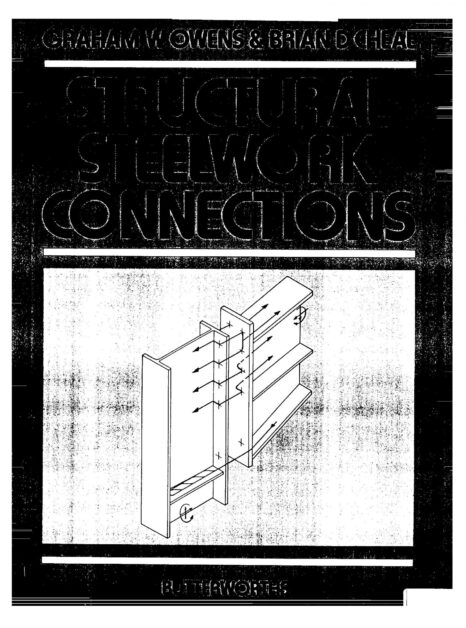
Structural Steelwork Connections
5 November 2017Table of Contents
Structural Steelwork Connections (Graham M. Owens & Brian D. Cheal)
When it comes to structural steel connection design, most engineers eventually reach the same point: you can’t rely only on hand calculations, basic textbooks, or scattered design notes. You need a dedicated reference that explains how connections really work, how forces flow through plates and bolts, and how to design joints that are not only safe—but also practical to fabricate and erect.
That’s exactly what Structural Steelwork Connections by Graham M. Owens and Brian D. Cheal delivers. It is a classic, engineering-focused book that gives steel designers a deeper understanding of steel joint behavior and connection detailing, making it a valuable read for both learning and real design work.
Quick Overview
Title: Structural Steelwork Connections
Authors: Graham M. Owens & Brian D. Cheal
Topic: Design and behavior of steel connections in building structures
Style: Technical + practical + design-based
Best For: Students, graduate engineers, design office engineers, and connection detailers
What This Book Covers (in Practical Terms)
This book focuses on the key connection types used in steel structures and explains them with design logic, structural behavior, and real connection layouts. It typically helps engineers understand:
-
Beam-to-column connections
-
End plates and fin plates
-
Bolted and welded connection behavior
-
Shear transfer mechanisms
-
Tension and compression load paths
-
Connection design philosophy and detailing rules
-
Common failure modes in steel joints
-
bolt shear / bearing
-
plate bending
-
block tearing / rupture
-
weld failure patterns
-
Instead of being only a formula book, it helps you interpret why certain connections are shaped the way they are, and howthe joint actually resists forces.
What I Liked Most (Strengths)
1) Excellent for building “connection intuition”
This is one of the biggest advantages of the book: it develops the engineer’s ability to predict connection behavior, which is critical in real projects—especially when the joint is not “textbook perfect.”
Once you understand load paths and failure mechanisms, you stop designing blindly and start designing confidently.
2) Strong balance between theory and detailing
Many structural books either:
-
stay too theoretical, or
-
jump straight to rules without explanation
This book sits in a very useful middle ground: it explains key mechanics, then ties them back to practical joint solutions.
3) Helpful for students and practicing engineers
If you’re studying steel structures, it’s a great learning resource.
If you’re already working, it’s a great “desk reference” when you need to verify concepts or review common connection arrangements.
What Could Be Better (Limitations)
1) It may not perfectly match modern Eurocode workflows
Depending on your local practice, you may find that modern steel design offices use newer standards and references (especially Eurocode-based documents). This book is still extremely useful, but you might need to adapt some approaches to your current design code environment.
2) More of a fundamentals-and-design book than a “quick design guide”
If you’re searching for something that gives you immediate “plug-and-play” design tables for every case, this might feel more detailed and explanatory. But that’s also why it’s valuable—it teaches you the logic behind the connection.
Who Should Read This Book?
You’ll benefit the most if you are:
-
A structural engineering student learning steel design
-
A graduate engineer starting connection design work
-
A design engineer who wants stronger understanding of failure modes
-
Someone checking or reviewing steelwork detailing
It’s also a strong choice if your goal is to improve your ability to design joints that are:
-
safe
-
efficient
-
buildable
-
easy to erect on site
Final Verdict
Structural Steelwork Connections (Owens & Cheal) is a solid and respected book that helps engineers understand steel joints properly—especially the behavior, load paths, and failure mechanisms that every designer must master.
If you want a book that improves your connection design skills beyond “just calculations,” this is a smart addition to your technical library.