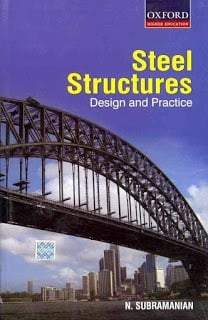
Steel Structures: Design and Practice by N. Subramanian

Steel Structures: Design and Practice by N. Subramanian

23 November 2017 Off By The Engineering Community

Steel Structures: Design and Practice by N. Subramanian


Steel is one of the most versatile construction materials in modern engineering—used in high-rise buildings, industrial plants, bridges, warehouses, towers, and long-span structures. But designing with steel is not only about selecting a section size. It requires real understanding of stability, connections, load paths, detailing, and practical construction behavior.

That’s exactly why Steel Structures: Design and Practice by N. Subramanian is a highly respected book in structural engineering. It brings together the “how” and the “why” of steel design, making it useful both as a learning textbook and a practical design reference.


Quick Overview

Title: Steel Structures: Design and Practice
Author: N. Subramanian
Category: Structural steel design + detailing practice
Best For: Civil/structural engineering students, design engineers, steel detailers, consultants
Use Cases: Building frames, industrial structures, trusses, plate girders, connections, stability design


What This Book Covers

One of the strengths of this book is that it blends steel theory with practical design applications. It typically covers topics such as:

  • Steel design fundamentals

    • load combinations and design philosophy

    • material properties and structural behavior

  • Tension and compression members

    • built-up sections, gusset connections

    • buckling behavior and design checks

  • Beams and beam-columns

    • bending and shear design

    • lateral torsional buckling concepts

  • Connections

    • bolted and welded joints

    • design and detailing principles

  • Trusses and roof structures

  • Plate girders and large-span systems

  • Structural stability and bracing systems

  • Practical detailing and fabrication considerations

This makes it a strong all-in-one resource: you learn the theory, then see how it converts into real structural elements.


What I Liked Most (Strengths)

✅ 1) Strong “design + practice” approach

The title is accurate: this book does not stay only on equations. It connects design rules with what engineers actually produce on drawings and shop fabrication.

That’s extremely useful when you want your designs to be:

  • safe

  • efficient

  • buildable

  • economical

✅ 2) Helpful for learning and self-study

The explanations are structured in a way that suits:

  • university coursework

  • exam preparation

  • design office training

  • independent learning for engineers shifting into steel design

✅ 3) Covers a wide range of steel systems

It’s not limited to basic beams and columns. The book tends to expand into systems like trusses and plate girders, which are very common in industrial and bridge-type structures.


What Could Be Better (Limitations)

⚠️ 1) Code approach depends on your region

Steel design depends on local design standards (Eurocode, AISC, IS codes, etc.). The engineering logic is universal, but you may need to adapt procedures to your local code requirements.

⚠️ 2) Not a replacement for specialized connection manuals

While it covers connections well, engineers who do a lot of connection design may still want a dedicated steel connections manual for deep joint capacity tables and advanced cases.


Who Should Read This Book?

✅ Recommended for:

  • structural engineering students learning steel design

  • graduate engineers working on steel buildings and industrial structures

  • engineers preparing for technical interviews and exams

  • professionals who want both design concepts and detailing awareness

🚫 Less essential for:

  • engineers seeking only advanced seismic steel design

  • specialists focused purely on computational finite element modeling


Final Verdict

Steel Structures: Design and Practice by N. Subramanian is a strong, practical, and comprehensive guide for steel structural design. Its biggest value is the way it connects engineering theory to real-world structural systems and detailing logic—helping engineers design steel structures with greater confidence and better constructability.