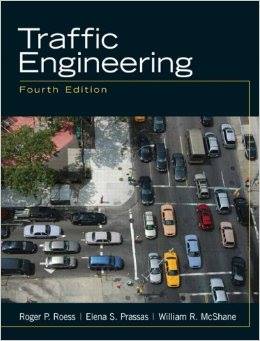
Traffic Engineering (Fourth Edition) by Roess, Prassas & McShane
11 November 2017Table of Contents
Traffic Engineering (Fourth Edition) by Roess, Prassas & McShane
Modern cities don’t just need roads—they need efficient movement. And that movement depends on traffic engineers who understand how to analyze flow, design intersections, improve safety, manage congestion, and plan for future demand. That’s why Traffic Engineering (Fourth Edition) by Roger P. Roess, Elena S. Prassas, and William R. McShane is considered one of the most trusted and widely used textbooks in the field.
This book is a strong blend of engineering principles, real-world analysis methods, and practical applications, making it ideal for students and professionals who want to build a solid foundation in transportation and traffic operations.
Quick Overview
Title: Traffic Engineering (Fourth Edition)
Authors: Roger P. Roess, Elena S. Prassas, William R. McShane
Field: Traffic engineering and transportation operations
Best for: Civil engineers, transportation engineers, students, urban planners (technical focus)
Use cases: Roadway capacity analysis, intersection design, signal timing, traffic flow evaluation, safety and operations
What This Book Covers
One of the biggest strengths of Traffic Engineering is that it covers traffic engineering as both a science and a practical profession. The book typically helps readers understand:
-
Traffic flow fundamentals
-
speed, flow, density relationships
-
capacity and level of service concepts
-
-
Traffic data collection methods
-
volume counts, travel time, spot speed studies
-
-
Highway and roadway capacity analysis
-
operational performance evaluation
-
-
Intersection analysis and design
-
signalized intersection design
-
unsignalized intersection capacity concepts
-
roundabout operations basics
-
-
Traffic signal control
-
timing concepts
-
progression and coordination principles
-
-
Queueing and delay estimation
-
Safety and traffic management fundamentals
-
crash trends, conflict points, operational improvements
-
-
Traffic engineering applications
-
real design problems, practical decision-making frameworks
-
It’s the type of book that helps you not only understand formulas, but also interpret what results mean in real planning and design contexts.
What I Liked Most (Strengths)
1) Very strong foundation for traffic flow analysis
If you want to build solid technical confidence in traffic operations, this book delivers. It explains the “why” behind traffic behavior—not just the output numbers.
That makes it much easier to interpret congestion problems and propose improvements.
2) Practical tools for real design tasks
This is not purely theoretical. It teaches methods that traffic engineers actually use when working on:
-
intersection upgrades
-
signal retiming
-
corridor analysis
-
traffic impact studies
-
operational performance assessments
3) Excellent for students and certification preparation
For engineering students and early-career engineers, it’s a very reliable textbook to support:
-
transportation engineering courses
-
exam preparation
-
developing structured engineering reports and calculations
What Could Be Better (Limitations)
1) Some parts can feel heavy if you’re completely new
Traffic engineering includes a lot of terminology, variables, and analysis logic. If you’ve never studied transport, the first chapters may feel dense—but the payoff is worth it once you start applying the concepts.
2) Needs to be paired with local standards for practice
Just like pavement or structural design, traffic engineering depends on local manuals and regulations. The book is a strong technical base, but real design work will still require:
-
national traffic design guidelines
-
road authority standards
-
local signal control policies
Who Should Read Traffic Engineering?
Best for:
-
civil engineering students specializing in transportation
-
traffic engineers working in operations and design
-
consultants doing traffic impact studies
-
engineers learning intersection capacity and delay analysis
-
professionals who want a deep foundation in traffic flow theory
Less ideal for:
-
readers seeking only high-level urban planning discussion
-
beginners who want a short introductory book without calculations
Final Verdict
Traffic Engineering (Fourth Edition) is one of the most reliable and comprehensive books for building strong skills in traffic flow, roadway operations, and intersection analysis. It’s detailed, technical, and highly relevant for anyone serious about working in traffic and transport engineering.