Accelerated Bridge Construction – Best Practices and Techniques
13 January 2021Table of Contents
Accelerated Bridge Construction: Best Practices and Techniques – Book Review
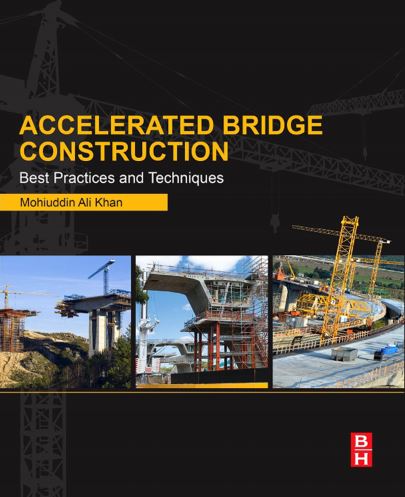
Accelerated Bridge Construction: Best Practices and Techniques by Mohiuddin Ali Khan is a practical and timely reference focused on one of the most important trends in modern bridge engineering: reducing construction time while maintaining safety, quality, and durability.
With increasing traffic demands and the need to minimize disruptions, Accelerated Bridge Construction (ABC) has become a critical approach for highway agencies and bridge engineers worldwide.
Overview of the Book
This book provides a comprehensive overview of Accelerated Bridge Construction methods, combining engineering principles, construction strategies, and real-world case studies. It addresses how bridges can be designed, fabricated, and erected faster using innovative materials, modular construction, and advanced planning techniques.
The content is highly practical, making it valuable not only for designers but also for construction engineers, project managers, and transportation agencies.
What Is Accelerated Bridge Construction (ABC)?
Accelerated Bridge Construction refers to techniques that reduce on-site construction time, often by shifting work to off-site fabrication or by using specialized erection methods. The goals of ABC include:
-
Minimizing traffic disruption
-
Improving worker and public safety
-
Enhancing construction quality
-
Reducing life-cycle costs
-
Speeding up project delivery
This book explains how these goals can be achieved through well-planned engineering and construction strategies.
Key Topics Covered
The book explores a wide range of ABC-related subjects, including:
-
Principles and planning of Accelerated Bridge Construction
-
Prefabricated Bridge Elements and Systems (PBES)
-
Modular bridge components
-
Rapid foundation and substructure construction
-
Superstructure erection techniques
-
Use of precast concrete and steel elements
-
Construction sequencing and logistics
-
Quality control and risk management
-
Case studies of successful ABC bridge projects
These topics make the book a strong reference for both new and experienced professionals.
Strengths of the Book
This book stands out because it:
-
Focuses on practical implementation, not just theory
-
Includes real-world examples and lessons learned
-
Addresses challenges such as site constraints and traffic management
-
Bridges the gap between design and construction
-
Supports decision-making for fast-track bridge projects
It is particularly valuable for engineers working on rehabilitation, replacement, and emergency bridge projects.
Who Should Read This Book?
This book is especially useful for:
-
Bridge and highway engineers
-
Construction and project engineers
-
Transportation agency professionals
-
Contractors involved in bridge works
-
Graduate students in structural and transportation engineering
It is suitable for anyone involved in planning, designing, or delivering bridge projects under time constraints.
Importance of ABC in Modern Infrastructure
As infrastructure networks age, agencies face increasing pressure to replace or rehabilitate bridges quickly. Accelerated Bridge Construction provides solutions that reduce social and economic impacts while maintaining structural performance.
This book helps engineers understand how to:
-
Select appropriate ABC techniques
-
Integrate design with construction planning
-
Improve constructability and safety
-
Deliver bridges faster without compromising quality
How to Obtain the Book Legally
To access the complete technical content, figures, and case studies, the book should be obtained through authorized and legal sources, such as:
-
The official publisher
-
Academic or professional libraries
-
Engineering bookstores
-
Reputable online retailers
Using official sources ensures access to the latest edition and complete material.
Final Thoughts
Accelerated Bridge Construction: Best Practices and Techniques is an essential reference for engineers and agencies seeking to modernize bridge delivery methods. Its emphasis on real-world applications makes it especially relevant in today’s fast-paced infrastructure environment.
For professionals involved in bridge replacement and rehabilitation projects, this book provides valuable insight into efficient, safe, and innovative construction practices.