Structural Section Connections and Trusses – Book Review

Structural Section Connections and Trusses – Book Review

13 January 2021 Off By The Engineering Community

Structural Section Connections and Trusses – Book Review


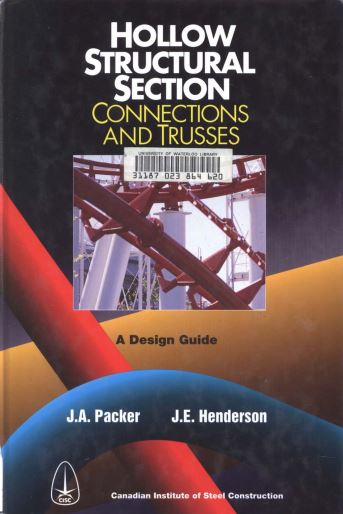
Structural Section Connections and Trusses: A Design Guide by J.A. Packer and J.E. Henderson is a highly regarded reference focused on the design and behavior of steel structural connections, with particular emphasis on tubular (HSS) sections and truss systems.

This book is widely used by practicing structural engineers, researchers, and graduate students working in steel structures and connection design.


Overview of the Book

The book provides practical guidance on how forces are transferred through structural connections, especially in systems using hollow structural sections (HSS). It bridges the gap between theoretical steel design and real-world connection detailing, which is often one of the most challenging aspects of structural engineering.

The authors combine experimental research, code-based design principles, and practical detailing advice, making the book both authoritative and usable in daily engineering practice.


Key Topics Covered

The book covers a wide range of topics related to steel connections and trusses, including:

  • Behavior of structural section (HSS) connections

  • Truss systems and load transfer mechanisms

  • Welded and bolted steel connections

  • Chord and brace connection behavior

  • Gusset plate design

  • Strength, stiffness, and failure modes of connections

  • Design considerations based on experimental results

  • Practical detailing recommendations

Special attention is given to connection efficiency, which is critical in truss design and steel frameworks.


Strengths of the Book

This book stands out because it:

  • Focuses specifically on connection behavior, not just member design

  • Is strongly supported by experimental research and test data

  • Explains failure mechanisms clearly, helping engineers avoid unsafe designs

  • Provides insight beyond minimum code requirements

  • Is highly relevant for steel trusses, space frames, and industrial structures

It is especially valuable for engineers dealing with complex steel joints where simplified assumptions may not be sufficient.


Who Should Read This Book?

This book is ideal for:

  • Structural engineers working with steel trusses and HSS members

  • Engineers involved in industrial, bridge, and long-span structures

  • Graduate students specializing in steel structures

  • Engineers responsible for connection design and detailing

  • Professionals reviewing or checking steel shop drawings

It is particularly useful when designing non-standard or highly loaded connections.


Importance in Modern Structural Design

Although modern design software can analyze steel structures efficiently, connection behavior often governs structural performance. This book helps engineers:

  • Understand the real behavior behind code equations

  • Design safer and more economical steel joints

  • Interpret design code provisions correctly

  • Improve constructability and detailing quality

A strong understanding of connections remains essential for safe steel structures.


How to Obtain the Book Legally

To ensure accuracy and access to the full technical content, this book should be obtained through official and authorized sources, such as:

  • The publisher’s official website

  • Engineering bookstores

  • Academic libraries

  • Reputable online retailers

Using authorized sources guarantees access to complete diagrams, tables, and design explanations.


Final Thoughts

Structural Section Connections and Trusses is a specialized yet highly practical reference that addresses one of the most critical aspects of steel structural engineering: connection design. Its research-based approach and practical focus make it a valuable addition to the library of any engineer working with steel structures.

For engineers seeking deeper understanding beyond basic steel design codes, this book provides long-term value and insight.