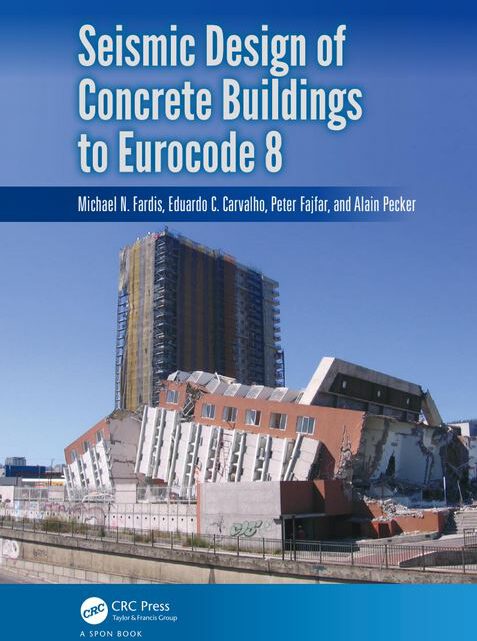
Seismic Design Of Concrete Buildings To Eurocode 8 Free PDF
9 January 2021Table of Contents
Seismic Design According to Eurocode 8: Practical Guidance for Structural Engineers
Seismic Design According to Eurocode 8 is one of the most authoritative references for engineers working on earthquake-resistant structures in Europe and regions adopting Eurocode standards. Written by Michael N. Fardis, Eduardo C. Carvalho, Peter Fajfar, and Alain Pecker, this book translates the complexity of Eurocode 8 (EN 1998)into practical design guidance supported by engineering insight and real-world examples.
Eurocode 8 is not just a set of formulas—it is a performance-based seismic design philosophy. This book helps engineers understand both the intent and the application of seismic rules.
What Is Eurocode 8 and Why It Matters
Eurocode 8 is the European standard for:
-
Seismic design of buildings
-
Earthquake resistance of civil engineering structures
-
Protection of life, property, and infrastructure during earthquakes
It defines how structures should:
-
Dissipate seismic energy
-
Avoid brittle failure
-
Maintain sufficient ductility and robustness
Because of its performance-based approach, Eurocode 8 requires engineering judgment, not just mechanical calculations.
What This Book Focuses On
This book serves as a technical companion to Eurocode 8, helping engineers bridge the gap between code text and practical design.
1. Interpretation of Eurocode 8 Provisions
The authors explain:
-
Why certain rules exist
-
How safety and ductility requirements are derived
-
How to correctly interpret clauses that are often misunderstood
This is especially valuable for engineers transitioning from older seismic codes.
2. Conceptual Seismic Design
Before calculations, the book emphasizes:
-
Structural regularity
-
Selection of seismic resisting systems
-
Proper load paths
This conceptual approach helps engineers avoid poor design decisions early in the project.
3. Design of Reinforced Concrete Structures
A large part of the book is dedicated to:
-
Reinforced concrete frames
-
Shear wall systems
-
Dual systems
It explains:
-
Capacity design principles
-
Ductile detailing requirements
-
Behavior under strong ground motion
4. Steel and Composite Structures
The book also addresses:
-
Steel moment frames
-
Braced systems
-
Composite structures
With a focus on:
-
Energy dissipation mechanisms
-
Plastic hinge formation
-
Global versus local ductility
5. Seismic Assessment and Existing Structures
Eurocode 8 is not limited to new buildings. The book discusses:
-
Assessment of existing structures
-
Seismic strengthening strategies
-
Performance evaluation under earthquakes
This is particularly relevant for rehabilitation and retrofitting projects.
Who Should Use This Book?
This reference is ideal for:
-
Structural engineers working in seismic regions
-
Engineers designing according to Eurocodes
-
Consultants involved in complex or high-risk projects
-
Graduate students specializing in earthquake engineering
It is especially useful for engineers who want to understand the “why” behind Eurocode 8, not just apply formulas.
How This Book Complements Structural Software
Modern structural software can perform seismic analysis efficiently, but:
-
Input assumptions must be correct
-
Results must be interpreted properly
-
Ductility and detailing must be verified manually
This book helps engineers:
-
Validate software models
-
Understand force redistribution
-
Ensure compliance with Eurocode seismic philosophy
It strengthens the engineer’s role beyond simply running calculations.
Why This Book Is Considered a Reference Standard
What makes this book stand out is:
-
Direct involvement of authors in Eurocode development
-
Strong link between theory, code, and practice
-
Clear explanation of complex seismic concepts
It is often cited in academic research and professional practice as a benchmark reference for Eurocode 8.
Final Thoughts
Seismic Design According to Eurocode 8 is not just a textbook—it is a professional guide for engineers who design structures to withstand earthquakes safely and responsibly. By explaining the reasoning behind Eurocode 8 and showing how to apply it correctly, this book helps engineers deliver safer, more reliable seismic designs.