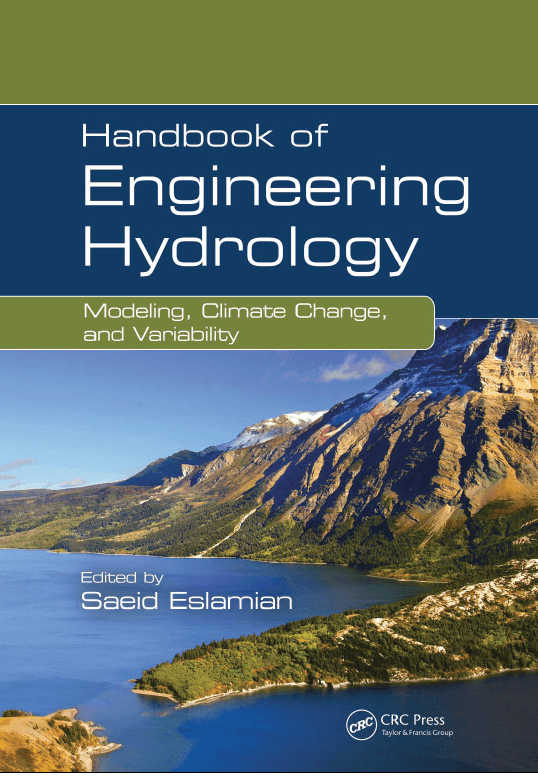
Handbook of Engineering Hydrology: Modeling, Climate Change, and Variability (Edited by Saeid Eslamian)
14 November 2017Table of Contents
Handbook of Engineering Hydrology: Modeling, Climate Change, and Variability (Edited by Saeid Eslamian)
Hydrology has changed. Traditional design assumptions—stationary rainfall patterns, stable flood frequency curves, predictable snowmelt timing—no longer hold in many regions. Engineers and water managers are now expected to design systems that can cope with non-stationarity, climate variability, and uncertain extremes.
That’s what makes Handbook of Engineering Hydrology: Modeling, Climate Change, and Variability (edited by Saeid Eslamian) an important and timely reference. It positions engineering hydrology within the reality of modern challenges: modeling complexity, climate signals, and decision-making under uncertainty.
Quick Overview
Title: Handbook of Engineering Hydrology: Modeling, Climate Change, and Variability
Editor: Saeid Eslamian
Publisher: CRC Press (Taylor & Francis)
Field: Engineering hydrology, hydrologic modeling, climate impacts
Best for: Hydrologists, water resources engineers, researchers, graduate students, consultants
Use cases: Flood risk assessment, climate-informed design, catchment modeling, drought and variability analysis
What This Book Covers
As a handbook-style reference, the book typically provides multi-author coverage across major themes in modern hydrology, including:
-
Hydrologic modeling approaches
-
conceptual vs physically based models
-
calibration/validation logic
-
data needs and uncertainty sources
-
-
Climate change impacts on hydrology
-
rainfall intensity shifts
-
changes in runoff timing and seasonality
-
extremes (floods and droughts)
-
-
Hydro-climatic variability
-
oscillations and long-term variability patterns
-
non-stationary frequency analysis concepts
-
-
Engineering applications
-
design storm selection challenges
-
risk-based approaches to infrastructure design
-
water resources planning under uncertainty
-
Instead of treating climate change as an “extra chapter,” the book frames it as a core part of engineering hydrology.
What I Liked Most (Strengths)
1) The right focus for today’s hydrology problems
If your work involves flood risk, drainage design, reservoir operations, or catchment analysis, this book matches the modern reality: the future often won’t look like the historical record.
It’s particularly useful for engineers trying to move from “historical frequency curves” toward more climate-aware approaches.
2) Broad coverage with a modeling mindset
Because it’s a handbook, it tends to offer multiple perspectives and methods, which is valuable when you’re comparing approaches for a project or research.
It’s also strong for readers who want to understand the modeling workflow: inputs → assumptions → calibration → uncertainty → decision use.
3) Useful bridge between research and practice
The book sits in a useful zone between academic literature and engineering application—helpful for consultants and graduate-level readers who need to support reports, studies, and climate impact assessments.
What Could Be Better (Limitations)
1) Handbook style means chapter depth varies
Multi-author handbooks can vary in style and depth across chapters. Some sections may be highly technical, while others are more overview-based.
2) Not a “step-by-step design manual”
If you’re looking for one unified procedure that tells you exactly how to size a culvert or produce a regulatory flood study, this won’t replace your local standards and authority guidance. It’s more of an advanced reference to strengthen your approach and reasoning.
Who Should Read This Book?
Recommended for:
-
hydrologists and water resources engineers working with climate impacts
-
consultants writing climate-informed flood and drought studies
-
researchers and graduate students in hydrology/hydroclimatology
-
engineers working on dams, drainage networks, reservoirs, and watershed modeling
-
practitioners who need better language and frameworks for uncertainty
Less ideal for:
-
beginners who want a first hydrology textbook
-
readers who need only local regulatory procedures (without modeling depth)
Final Verdict
Handbook of Engineering Hydrology: Modeling, Climate Change, and Variability is a strong reference for modern water engineering challenges. Its biggest advantage is that it treats climate change and variability as central to engineering hydrology—not optional extras. If you work with hydrologic modeling, flood risk, or water resources planning, it can help you build more defensible, future-aware studies.