Earthquake Engineering Mechanism, Damage Assessment And Structural Design Free PDF
9 January 2021Table of Contents
Earthquake Engineering: Mechanisms, Damage Assessment, and Structural Design
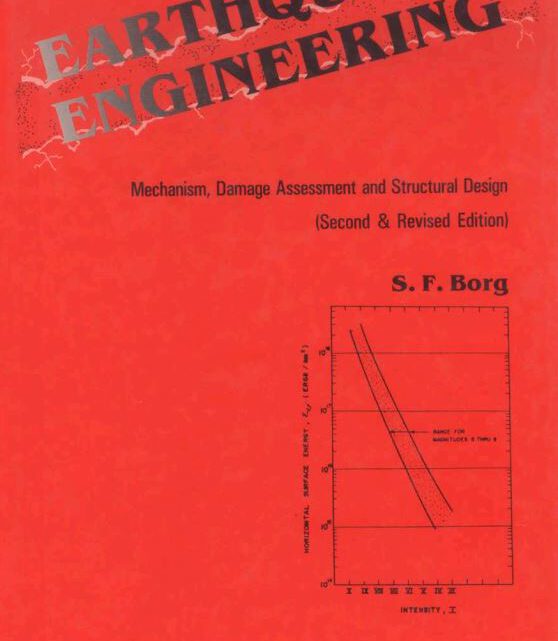
Earthquake Engineering: Mechanisms, Damage Assessment, and Structural Design by S. F. Borg is a specialized reference that focuses on the fundamental behavior of structures under seismic loading and the relationship between earthquake mechanisms, observed damage, and engineering design decisions.
Unlike general seismic design manuals, this book places strong emphasis on understanding damage patterns, making it particularly valuable for engineers involved in seismic assessment, forensic engineering, and retrofit design.
Understanding Earthquake Mechanisms in Structural Engineering
One of the book’s key strengths is its explanation of earthquake mechanisms from an engineering perspective. It explores how seismic forces interact with structures, considering:
-
Ground motion characteristics
-
Structural dynamic response
-
Energy dissipation mechanisms
-
Progressive damage development
This foundational understanding allows engineers to predict not only whether a structure survives an earthquake, but how and where damage is likely to occur.
Structural Damage Assessment: From Observation to Engineering Judgment
A central theme of the book is damage assessment. Rather than relying solely on code-based checks, the author emphasizes:
-
Identification of critical damage zones
-
Interpretation of crack patterns and deformations
-
Correlation between observed damage and structural behavior
This approach is essential for:
-
Post-earthquake inspections
-
Structural safety evaluations
-
Decision-making on repair or demolition
The book helps engineers move from visual observations to quantified engineering conclusions.
Linking Damage Mechanisms to Structural Design
The book clearly connects damage mechanisms to design strategies, showing how engineering choices influence seismic performance. Topics include:
-
Ductile versus brittle failure modes
-
Load redistribution after yielding
-
Role of detailing in controlling damage
-
Structural redundancy and robustness
This makes the book especially useful for engineers designing structures in moderate to high seismic regions.
Applications in Seismic Retrofit and Rehabilitation
Because it focuses on damage behavior, this reference is highly relevant for:
-
Seismic strengthening of existing buildings
-
Retrofit strategy selection
-
Performance-based seismic design
It supports engineers in choosing interventions that improve safety without unnecessary overdesign.
Who Should Read This Book?
This reference is best suited for:
-
Structural engineers working in seismic assessment
-
Engineers involved in post-earthquake evaluations
-
Consultants specializing in retrofitting and rehabilitation
-
Graduate students in earthquake engineering
It is particularly valuable for professionals who want to go beyond code compliance and understand real structural behavior.
How This Book Complements Seismic Design Codes
Seismic codes define minimum requirements, but they cannot fully describe damage evolution. This book complements design codes by:
-
Explaining the physical meaning behind code rules
-
Helping engineers interpret analysis results
-
Improving judgment when dealing with existing structures
It strengthens the engineer’s ability to design safer and more resilient structures.
Why This Book Remains Relevant Today
Even with advanced numerical tools and modern seismic software, understanding damage mechanisms remains essential. This book provides timeless engineering insight that:
-
Improves modeling assumptions
-
Enhances interpretation of nonlinear analyses
-
Supports better seismic decision-making
Its focus on behavior rather than software outputs makes it a long-term reference.
Final Thoughts
Earthquake Engineering: Mechanisms, Damage Assessment, and Structural Design is a valuable technical resource for engineers who want to understand why structures fail, how damage develops, and how design can control seismic performance.